The End of Time - Appreciation Index
Sunday, 3 January 2010 - Reported by Marcus
David Tennant's swansong scored an Appreciation Index figure of 89 on BBC One on Friday.
The Appreciation Index, or AI, is a measure of how much the audience enjoyed the programme. A figure of 89 is incredibly high, especially for a programme with such a large audience. The show scored well on all indicators, with viewers marking it as a high-quality programme which they made a special effort to watch. It scored highest with the female audience and with those aged 35-55.
The End of Time - Part Two is the highest scoring of the five specials. Only the last two episodes of Series Four have scored higher on their first transmission.
Earlier in the day, the repeat of The End of Time - Part One, with its lower audience of 2 million, scored an AI figure of 90.
The Appreciation Index, or AI, is a measure of how much the audience enjoyed the programme. A figure of 89 is incredibly high, especially for a programme with such a large audience. The show scored well on all indicators, with viewers marking it as a high-quality programme which they made a special effort to watch. It scored highest with the female audience and with those aged 35-55.
The End of Time - Part Two is the highest scoring of the five specials. Only the last two episodes of Series Four have scored higher on their first transmission.
Earlier in the day, the repeat of The End of Time - Part One, with its lower audience of 2 million, scored an AI figure of 90.
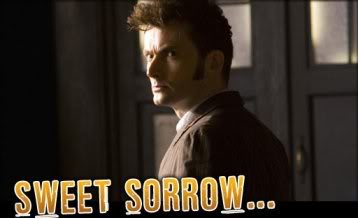 10.4 million people watched the final part of The End of Time on BBC One yesterday, according to unofficial overnight figures.
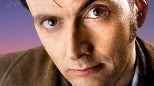 It marks the last story for the Tenth Doctor as played by David Tennant, who leaves the series after four years in the role and with 47 episodes under his belt. Tennant departs at the peak of his popularity, and was recently voted the best Doctor ever by the readers of Doctor Who Magazine. His dedication to the role has been tremendous, and he has led the cast of a series that scores incredibly high in the audience appreciation figures. His popularity is such that the BBC made him the centrepiece of its Christmas schedule; he is the first Doctor ever to have featured in a BBC One ident.
 Today also marks the end of the Russell T Davies and Julie Gardner era of the series. Gardner and Davies have been involved with the show since the return was first mooted in 2003. Together they have been responsible for the realisation of the revived series and have turned Doctor Who into one of the biggest BBC properties in the first decade of the 21st Century. They have been responsible for 60 episodes and have made Doctor Who must-see television which regularly charts in the top ten programmes of the week. They have cast two Doctors, Christopher Eccleston and David Tennant, and created two spin-offs, Torchwood and The Sarah Jane Adventures, both of which have had tremendous success and are due to be commissioned for their fourth series.
 The new Radio Times marks Matt Smith out as one of the ten people to watch in 2010. In the magazine, new executive producer Steven Moffat tells why viewers will be transfixed by Smith's portrayal of The Doctor. He describes him as a strong quiet man who conveys gravitas perfectly. "His most powerful moments are when he is very very quiet. in a way that a very powerful person can be... It's all implied strength rather than demonstrated bluster."


 Subscribe to News
 Follow us on Twitter
 Like us on Facebook
 Contact Us