MARCH 1962: Is there merit in science-fiction on TV?
By John Bowman, Chuck Foster, and Marcus
Every fan knows that Doctor Who began on 23rd November 1963, but the first tentative steps that led to the launch of what would become the world's longest-running and most successful science-fiction series in television history took place 20 months earlier, in Spring 1962 - 50 years ago.
As we head towards the 50th anniversary of the first broadcast of the show's first episode, An Unearthly Child, Doctor Who News is proud to present this occasional series that will go back in time to celebrate and mark the golden milestones in the creation of a true TV legend.

The BBC of the early Sixties was a very different organisation to the global multi-media corporation that exists today. The British Broadcasting Company was founded in 1922 by a group of six electronics companies that needed to make radio programmes to provide content for the sets they were trying to sell. By 1927, a Royal Charter was granted, the Company had become a Corporation, and had developed into the world's largest public-service broadcaster. By 1962, radio was still considered to be a more important service than television, with the BBC broadcasting three national networks: the Home Service, the Light Programme, and the Third Programme.

Television tests had begun as early as 1929, with the world's first regular high-definition service launching on
2nd November 1936. After a break because of World War II, transmissions resumed in 1946. The BBC had exclusive use of the airwaves until 1955, when competition arrived with the formation of the commercial channel ITV, and the BBC faced a rival for the first time in its history. Struggling to compete, the BBC appointed a dynamic new Director-General,
Hugh Carleton Greene, in 1960. He took an organisation seen by many as a stuffy, stagnating branch of the Establishment and turned it into a radical, risk-taking, innovative broadcaster, producing programmes as diverse as
Steptoe and Son,
Cathy Come Home, and
That Was The Week That Was.
By 1962, TV sets were a feature in nearly 13 million of the UK's 17 million homes. The BBC radio licence fee stood at £1 per year, but to watch television you would need to fork out £3 plus £1 excise duty, making £4 each year, roughly equal to £64 today. For that you could watch the single BBC channel, which broadcast for around eight hours each day, closing down at 11pm until around lunchtime the next day.
From its inception, BBC Television had been an eclectic mix of genres, with drama featuring from the very start.
The Man With the Flower in His Mouth, an adaptation of the short play by Luigi Pirandello, was the first drama transmitted, being broadcast live on
14th July 1930. By 1938, the first science-fiction programme had been commissioned.
R.U.R. (aka
Rossum's Universal Robots) was a 35-minute adaptation of a section of Karel Čapek's 1920 play broadcast on
11th February 1938. The play in full was broadcast live a decade later, with future Doctor
Patrick Troughton in the role of Radius.

By the Sixties, the BBC had a well-established Drama Unit. Split into two separate groups, the Script Department was responsible for commissioning and developing scripts, and the Drama Department would then be tasked with making the shows. At the time, the Script Department was headed by
Donald Wilson, a veteran of the film industry who had joined the Corporation in 1955. Wilson had a team of eight script editors working for him, each with a brief to develop a strand of programming, as well as writers, adapters, readers and researchers.
The appetite for ideas for new material to be developed by the department was huge and it was Wilson who had set up a small group called the Monitoring Group, later known as the Survey Group, whose task was to keep a watching brief on other media and to look for ideas that could be used by the Script Department in developing ideas for television.

The impetus of the report that would eventually lead to the creation of
Doctor Who came from former screenwriter and lyricist
Eric Maschwitz. Maschwitz had, until recently, been the Head of Light Entertainment at BBC Television, so was not known for his drama connections, but by early 1962 he was working as Assistant and Adviser to the Controller of Programmes.
It was in this capacity that Maschwitz, in
March 1962, suggested to Wilson that the Survey Group investigate the literary genre of science-fiction to see if such material was suitable for a series of short, single adaptations. Wilson set two of his staff, script editor for drama
Donald Bull and his colleague
Alice Frick, the task of producing a report to be presented to an upcoming script meeting.
It was with the commissioning of this report that wheels began turning and events were put in motion that would lead to the first episode of
Doctor Who being screened on
23rd November 1963.
PREVIOUS BRITISH TV SF & TELEFANTASY (including Doctor Who connections):
- R.U.R. (aka Rossum's Universal Robots) - A 35-minute adaptation of a section of Karel Čapek's 1920 play, broadcast on BBC TV on 11th February 1938. It is the first piece of TV SF ever to be broadcast. An adaptation of the entire play, running to 90 minutes, is broadcast live by the BBC on 4th and 5th March 1948, with Patrick Troughton in the role of Radius. (The character name of Taren Capel, in The Robots of Death, is a nod to Čapek.)
- The Time Machine - Adaptation of the HG Wells novella, broadcast live by BBC TV on 25th January 1949.
- Stranger From Space - Children's series, part of the magazine programme Whirligig. Series one (11 episodes) started 20th October 1951. Series two (six episodes) started 11th October 1952. Starred Valentine Dyall and Peter Hawkins.
- Number Three – First telefantasy script by BBC TV drama writer Nigel Kneale, jointly adapting with George F Kerr the novel by Charles Irving and centring on a mad scientist at an atomic research station. Jack Watling and Terence Alexander were in it, as was Peter Cushing (later to play Dr Who in the two Dalek films made by Amicus) in a minor role. Aired 1st February 1953.
- The Quatermass Experiment - Written by Nigel Kneale. Six episodes, broadcast live (with pre-filmed inserts) weekly from 18th July 1953.
- Time Slip - Half-hour BBC TV play about a man in the future - 4.7 seconds in the future, to be precise! Aired 25th November 1953.
- The Lost Planet - BBC TV children's series (adapted from radio). Six episodes from 16th January 1954 (last episode on 27th March) with Wolfe Morris in the cast.
- Nineteen Eighty-Four - Adaptation by Nigel Kneale of George Orwell's novel, broadcast live (with pre-filmed inserts) on BBC TV on 12th and 16th December 1954, starring Peter Cushing as Winston Smith and André Morell as O'Brien.
- Return to the Lost Planet - BBC TV sequel to The Lost Planet and also adapted from radio. Children’s series. Six episodes from 8th January 1955, again featuring Wolfe Morris in the cast.
- The Voices – BBC TV play for adults, adapted from the Robert Crane novel Hero's Walk. Starred Kevin Stoney, Barry Letts, and Terence Alexander. Aired 16th January 1955.
- The Creature – Shown on BBC TV on 30th January 1955. Quest to find the Yeti in the Himalayas. A remote monastery is involved as part of the action! Written by Nigel Kneale and starring Peter Cushing. A film version, The Abominable Snowman, with Cushing reprising his role, is made by Hammer in 1957.
- Quatermass II - Written by Nigel Kneale. Six episodes, broadcast live (with pre-filmed inserts) weekly from 22nd October 1955 (exactly a month after ITV started). Cast included Roger Delgado. It is the earliest surviving complete British SF TV production.
- Space School - BBC TV children's series. Four episodes, aired from 8th January 1956. Cast included Edmund Warwick.
- One – Nineteen Eighty-Four-type ITV drama. Aired 16th April 1956.
- The Strange World of Planet X – Seven episodes (or maybe six). Adaptation of Rene Ray novel for ITV. SF-horror tale, starring David Garth and William Lucas. Started 15th September 1956.
- Man In A Moon – ITV Armchair Theatre play about a murderer chosen to be the first astronaut, as the technology for his return doesn't exist. Written by Michael Pertwee. Cast included Damaris Hayman. Aired 11th or 17th November 1957 (exact date unknown). (Armchair Theatre was an anthology series that Verity Lambert worked on as a production assistant.)
- The Critical Point – BBC TV drama about "hibernation anaesthesia". Aired 5th December 1957. (cf Adam Adamant Lives!, which was co-created by Donald Cotton, co-developed by Sydney Newman, produced by Verity Lambert, and ran from 23rd June 1966 to 25th March 1967.)
- Time Is The Enemy – ITV time-travel serial made for children. Started 18th March 1958. Seven episodes. Cast included Anne Reid and Derek Waring.
- 2000 Minus 60 – ITV Television Playhouse presentation about an eve-of-millennium doomsday scenario! Aired 4th April 1958.
- The Invisible Man – ITV reworking of HG Wells' story, Two series, each of 13 episodes, from 14th September 1958 and 12th April 1959. Starred Deborah Watling. Series one episode 13 saw Patrick Troughton in the cast. Series two episode 1 saw Barry Letts in the cast, while Derrick Sherwin was in episode 13. Writers included Ian Stuart Black and Michael Pertwee.
- I Can Destroy The Sun – ITV Armchair Theatre production about a mad scientist. Cast included Maurice Denham. Aired 12th October 1958.
- The Greatest Man In The World – Armchair Theatre play (adapted from a story by James Thurber) about the first astronaut, with Patrick McGoohan as aforementioned astronaut. Aired 9th November 1958.
- Quatermass And The Pit - Written by Nigel Kneale (as a freelancer). Six episodes, broadcast live (with pre-filmed inserts) weekly from 22nd December 1958.
- Torchy The Battery Boy - Roberta Leigh puppet series made for ITV. 52 episodes over two series (first series made by Gerry Anderson's AP Films). Broadcast 1958-59 (exact dates unknown).
- Target Luna - ITV series made by ABC for children, co-written by Malcolm Hulke and starring Michael Craze. Six episodes broadcast weekly from 24th April 1960.
- Night of the Big Heat – ITV Play of the Week, adapted from the SF novel by John Lymington, about an alien invasion centring on Salisbury Plain. Aired 14th June 1960.
- Pathfinders In Space - ITV series made by ABC, co-written by Malcolm Hulke, produced by Sydney Newman, and billed as a sequel to Target Luna. Seven episodes, broadcast from 11th September 1960. Starred Gerald Flood.
- Pathfinders To Mars - Sequel to Pathfinders In Space, co-written by Malcolm Hulke and produced by Sydney Newman. Six episodes, broadcast from 11th December 1960. Starred Gerald Flood and George Coulouris.
- The Avengers – Long-running ITV telefantasy series, produced by ABC, started on 7th January 1961. Created by Sydney Newman.
- Supercar - Gerry Anderson Supermarionation series made for ITV. 39 episodes. Started broadcasting on 28th January 1961.
- Pathfinders To Venus - Sequel to Pathfinders To Mars. Co-written by Malcolm Hulke and produced by Sydney Newman. Starred Gerald Flood. Eight episodes from 5th March 1961.
- The Man Out There – Patrick McGoohan is back in space for ABC's Armchair Theatre, this time playing a cosmonaut who is trapped while in orbit. Aired 12th March 1961.
- Countdown At Woomera – ITV Play of the Week set in 1968 and centring on the launch of the first British astronaut. Aired 13th June 1961.
- A For Andromeda - BBC TV SF drama serial. Seven episodes, broadcast from 3rd October 1961. Starred Peter Halliday, Esmond Knight, Noel Johnson, John Hollis, and Mary Morris. Co-produced by Michael Hayes.
- The Escape of R.D.7 – BBC TV five-part drama about an anti-rat virus experiment that goes horribly wrong (cf Survivors and Doomwatch). Started 21st November 1961 (the week after A For Andromeda finished) and starred Barbara Murray. The cast also included Derek Waring, John Dearth, and Alec Ross.
- Murder Club – ITV Armchair Theatre play, adapted by Robert Sheckley from his story The Seventh Victim. Set in the 22nd century and centring on legalised murder. Aired 3rd December 1961. Saw the TV debut of Richard Briers and featured Barbara Murray as well as Steve Plytas.
- The Big Pull - SF serial written for BBC TV and produced by Terence Dudley. Six 30-minute episodes, broadcast weekly from 9th June 1962.
- Dumb Martian - Hour-long SF play on ITV station ABC, broadcast on 24th June 1962. Adapted from a John Wyndham story and broadcast in the Armchair Theatre slot.
- The Andromeda Breakthrough - Sequel to A For Andromeda. Six weekly episodes broadcast on BBC TV from 28th June 1962 and again starring Peter Halliday, John Hollis, and Mary Morris.
- Out of this World - First sci-fi anthology series on British TV. Greenlit by ABC drama supervisor Sydney Newman. Thirteen weekly episodes broadcast from 30th June 1962.
- Fireball XL5 - Gerry & Sylvia Anderson Supermarionation series made for ITV. 39 episodes. Started broadcasting on 28th October 1962.
- The Monsters - BBC TV sci-fi serial. Four x 45-to-50-minute weekly episodes, directed by Mervyn Pinfield. Started broadcasting on 8th November 1962. Cast included Philip Madoc, Clifford Cox, George Pravda, Clive Morton, Clifford Earl, and Norman Mitchell. The music was by Humphrey Searle, and Bernard Wilkie was one half of the team behind the special effects.
- Dimension of Fear – ITV four-part SF series. A space research centre near a sleepy English village is threatened by an other-worldly force. Started 5th January 1963. Cast included Michael Robbins, Peter Copley, and Mark Eden. Written by John Lucarotti.
- Space Patrol - Roberta Leigh puppet series made for ITV. 39 episodes. Started broadcasting on 7th April 1963.
- The Freewheelers – A drama set in the near-future and focusing on youngsters stealing cars for kicks. Cast included Peter Birrel. Aired on ITV on 5th May 1963. (Not to be confused with the later ITV series Freewheelers that starred Wendy Padbury among other Doctor Who luminaries.)
- Loop – SF play for ITV company ATV by Giles Cooper (who would be referenced by Alice Frick and Donald Bull in their report of 25th April 1962) in which TV becomes a weapon thanks to people from the future. Aired 20th October 1963 and starred Rodney Bewes and Geoffrey Bayldon.
1962 TOP BBC PERSONNEL:
- Hugh Carleton Greene – Director-General, 1960-69
Editor-in-Chief of the BBC and the person ultimately responsible for everything broadcast - Kenneth Adam – Director of Television, 1961-68
Responsible for everything on BBC Television - Stuart Hood - Controller of Programmes at BBC TV, 1961-63
- Donald Baverstock – Assistant Controller of Programmes for BBC TV, 1961-63
- Norman Rutherford – Acting Head of Drama (having taken over from Michael Barry in September 1961) until December 1962 and the arrival of Sydney Newman from ABC
- Donald Wilson – Head of Script Department
- Eric Maschwitz – Assistant and Adviser to the Controller of Programmes
 Daleks will be invading navy-related museums in England over the next few months.
 Premiered at the
  Doctor Who will return to America to shoot the final story featuring Amy and Rory, as they depart the series in an epic battle with the Weeping Angels to be shot in New York.

 Originally expected this month, the new game from BBC Worldwide, Doctor Who: The Eternity Clock, has been delayed, with the game's official
 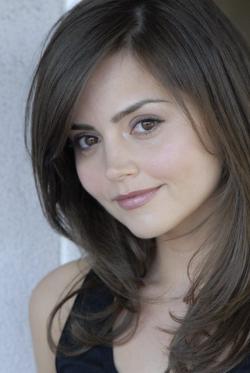 The BBC have announced that the new co-star to appear alongside







 Subscribe to News
 Follow us on Twitter
 Like us on Facebook
 Contact Us