AudioGo: October releases

Tuesday, 1 October 2013 - Reported by Chuck Foster
AudioGo's ongoing celebration of 50 Years of Doctor Who reaches its penultimate adventure in October with the Tenth Doctor and Donna embroiled with Death's Deal. Meanwhile the Sixth Doctor's trial continues in the second part of the Target novelisations of The Trial of a Time Lord, whilst Louise Jameson takes listeners on a trip into the BBC Radio Archive to find Lost Treasures.

Destiny of the Doctor: Death's Deal (Credit: AudioGo)Destiny of the Doctor: Death's Deal
Starring Catherine Tate, with Duncan Wisbey (pre-order)

Responding to multiple maydays, the TARDIS lands on the planet of Death’s Deal, but the distress calls are old, the final echoes of terrified lost souls. This is an exotic world of lethal creatures, nicknamed ‘The Deadliest Planet in the Galaxy’, and only the brave, foolhardy or greedy would ever dare to visit.

Finding themselves stranded among a motley bunch of space-tourists, the Doctor and Donna must lead a struggle for survival against the frenzied wildlife, as they slowly realise that other members of the group have very different agendas.

And soon the Doctor learns of an even bigger threat hiding on Death’s Deal. Somewhere deep below the surface, is something that must never be unearthed.

Time is running out, and only an impossible survivor holds the key...


To be in with a chance to win one of three copies of Death's Deal courtesy of AudioGo, answer the following question:
Name a televised story where the Doctor ends up involved in an adventure after responding to a mayday call.
Send your answer to comp-deathsdeal@doctorwhonews.net with the subject line "Doctor-Donna", along with your name, address, and where you saw the competition (the news website, twitter, facebook, etc.). Only one entry per postal address will be accepted. The competition is open worldwide, and the closing date is 6th October 2013.
The Trial of a Time Lord (Volume Two) (Credit: AudioGo)The Trial Of A Time Lord (Vol 2)
Read by Bonnie Langford and Michael Jayston (pre-order)

Bonnie Langford and Michael Jayston read these thrilling novelisations of the final two adventures in 'The Trial of a Time Lord', featuring the Sixth Doctor.

Doctor Who: Terror of the Vervoids: On trial for his life, the Doctor defends himself by telling of an adventure set on board the Hyperion III space liner in his future. Answering a distress call, the Doctor and Mel arrive on the liner just as a series of grisly murders begins. Who is behind the murders? Do the enigmatic Mogarians have anything to do with them? Who sent the distress call to the TARDIS? And what hideous menace lies waiting in the Hydroponic Centre?

Doctor Who: The Ultimate Foe: While the Doctor asserts that the evidence of the Matrix, the repository of all Time Lord knowledge, has been tampered with, the mysterious and vengeful prosecuting council, the Valeyard, is confident that the Doctor will be sentenced to death. In a dramatic intervention the Valeyard's true identity is revealed but he escapes from the Courtroom into the Matrix, and it is into this nightmare world that the Doctor must follow - to face his ultimate foe...


To be in with a chance to win one of three copies of Volume Two courtesy of AudioGo, answer the following question:
What does the Key of Rassilon grant access to, as revealed in The Ultimate Foe?
Send your answer to comp-trial@doctorwhonews.net with the subject line "The catharsis of spurious morality", along with your name, address, and where you saw the competition (the news website, twitter, facebook, etc.). Only one entry per postal address will be accepted. The competition is open worldwide, and the closing date is 6th October 2013.
Doctor Who at the BBC: Lost Treasures (Credit: AudioGo)Doctor Who at the BBC: Lost Treasures
Presented by Louise Jameson (pre-order)

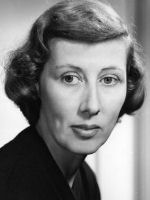
Louise Jameson presents a time travelling journey behind the scenes of Doctor Who. Do you remember when the Fourth Doctor called in on Pete Murray's Open House? Or when Louise Jameson was menaced by a Dalek? Do you remember June Whitfield auditioning a Dalek? If not, now's your chance to catch up! Featuring rare recordings, this collection is full of gems. There are contributions from six lead actors - Jon Pertwee, Tom Baker, Sylvester McCoy, Christopher Eccleston, David Tennant and Matt Smith - plus co-stars Louise Jameson, Lalla Ward, Nicholas Courtney, Karen Gillan and Jenna Coleman, and production personnel including Delia Derbyshire, Peter Howell, Pennant Roberts, Russell T Davies and Steven Moffat. There are also features on the show's theme tune; the recovery of a lost TV episode; the cancellation of Shada and the legendary Blackpool exhibition, along with clips from a radio programme broadcast live from a Doctor Who convention!


To be in with a chance to win one of three copies of Lost Treasures courtesy of AudioGo, answer the following question:
Name the character June Whitfield played when she appeared in Doctor Who
Send your answer to comp-treasures@doctorwhonews.net with the subject line "On the hunt", along with your name, address, and where you saw the competition (the news website, twitter, facebook, etc.). Only one entry per postal address will be accepted. The competition is open worldwide, and the closing date is 6th October 2013.

All eight of the Doctor Who at the BBC series of CDs are also to be released in a boxed set:

50 Years of Doctor Who at the BBC (Credit: AudioGo)50 Years of Doctor Who at the BBC
Eight CD Collection (pre-order)

Celebrate 50 Years of Doctor Who at the BBC with this unique collection of behind-the-scenes interviews, set reports, lively discussions, comedy and drama, including items from Blue Peter, Woman's Hour, Today, Pete Murray's Open House, Nationwide, Newsbeat, I'm Sorry I Haven't a Clue, Dead Ringers, The Now Show, Week Ending, PM and many more. Featuring Freema Agyeman, Tom Baker, John Barrowman, Phil Collinson, Russell T. Davies, Peter Davison, Christopher Eccleston, Janet Fielding, Carole Ann Ford, Julie Gardner, Karen Gillan, Michael Grade, Anthony Head, Louise Jameson, John Leeson, Sylvester McCoy, Paul McGann, Kylie Minogue, Steven Moffat, John Nathan-Turner, Terry Nation, Jon Pertwee, Billie Piper, Elisabeth Sladen, Matt Smith, Sarah Sutton, Mary Tamm, Catherine Tate, David Tennant, Patrick Troughton, Lalla Ward, Matthew Waterhouse, and many, many more. Also includes the full-cast radio plays Regenerations by Daragh Carville, Blue Sands and Golden Veils by Martyn Wade and Dalek I Love You by Colin Sharpe, plus an extended version of BBC Radio 2's 2005 documentary Project Who?

Over 17 hours of features from BBC Radio and Television, from the 1960s to the present day, presented by Elisabeth Sladen, Anthony Head and Louise Jameson.

Volume 1: 30 Years and More
Volume 2: In the Hot Seat
Volume 3: Now and Then
Volume 4: The Plays
Volume 5: Project Who?
Volume 6: The Tenth Doctor
Volume 7: A Legend Reborn
Volume 8: Lost Treasures


To be in with a chance to win one of three copies of 50 Years of Doctor Who at the BBC courtesy of AudioGo, answer the following question:
The Doctor's grand-daughter was the focus of another radio play, but who played her?
Send your answer to comp-50Years@doctorwhonews.net with the subject line "This is the BBC", along with your name, address, and where you saw the competition (the news website, twitter, facebook, etc.). Only one entry per postal address will be accepted. The competition is open worldwide, and the closing date is 6th October 2013.


FILTER: - Sixth Doctor - Audio - Competitions - WHO50 - Tenth Doctor

The Tenth Doctor Revisited On BBC America

Tuesday, 1 October 2013 - Reported by John Bowman
BBC America is to mark the era of the Tenth Doctor by showing the episodes The Stolen Earth and Journey's End on Sunday 27th October as part of its celebratory season Doctor Who: The Doctors Revisited.

They will be preceded at 8pm ET/PT by the special documentary Doctor Who: The Doctors Revisited - The Tenth Doctor, which will feature David Tennant, Freema Agyeman, and current lead writer and executive producer Steven Moffat among those discussing how and why the Tenth Doctor became one of the most popular Doctors of all time.

Written by Russell T Davies and directed by Graeme Harper, the episodes - which were originally broadcast in June and July 2008 - comprised the epic finale of Series 4 and saw the Doctor, companions, and friends unite to take on the might of a new Dalek empire and Davros.

UPDATE: The associated DVD, which will be released on Tuesday 3rd December and is available to pre-order, will comprise three discs and will have the Revisited stories shown for the Ninth, Tenth, and Eleventh Doctors, as well as the accompanying documentaries plus special introductions by Steven Moffat to each two-parter. The product description states that the episodes for the Eleventh Doctor's era will be The Impossible Astronaut and Day of the Moon. Their broadcast date is still to be announced.


FILTER: - Steven Moffat - Freema Agyeman - USA - BBC America - David Tennant - Tenth Doctor

An Unearthly Series - The Origins of a TV Legend

Monday, 30 September 2013 - Reported by Anthony Weight
Drop the Pilot
The twenty-second in our series telling the story of the creation of Doctor Who, from conception to broadcast.

By the end of September 1963, Doctor Who finally existed as a television programme. After months of meetings, format documents, script development and occasional arguments, a production team was in place, the four leads had been cast, and the début serial had been decided upon as Anthony Coburn's four-parter mainly set in the Stone Age. On Friday 27th September, director Waris Hussein had shot the opening instalment of Coburn's serial at Lime Grove Studios – the very first episode of Doctor Who to be made.

However, it was an episode that would not be transmitted on British television for another 28 years. 


It had always been part of the plans for the production of the series that the opening episode could, if necessary, be remounted if it was deemed not sufficiently strong for the launch of the new programme. The costs would be met from the BBC Pilot Fund, and the production team would be given the opportunity to have another attempt.

By Monday 30th September 1963 – exactly 50 years ago today – it was clear that this would indeed have to be the case. The BBC’s Head of Drama Sydney Newman, the man who had driven forward the creation of Doctor Who, had viewed the studio recording from Friday evening, and he was not impressed.

Newman’s thoughts on the pilot episode survive in the BBC Written Archives, scribbled down on the back of two pages of script for An Unearthly Child while he viewed the recording. Newman had concerns or observations about many aspects of the production, such as the music, the camera work and the end credits, but his biggest concern – and the aspect that would perhaps show the strongest change between the pilot and the transmitted version of An Unearthly Child – was with William Hartnell’s characterisation of the Doctor.

“Old man – not funny enough,” reads one of Newman’s notes, jotted while the action unfolded in front of him. And again, later – “Old man ain’t cute enough.” Newman decided that the character of the Doctor needed to be softened and made more sympathetic, along with other changes to the episode, and made the decision that producer Verity Lambert, director Hussein, the cast and crew would simply have to try again. As Newman later told Doctor Who Magazine:

That was a dummy run, and it didn’t work out right because Bill Hartnell’s characterisation was a bit too nasty and I thought he would put off the viewers.

More than 40 years after the pilot recording, in the Doctor Who: Origins documentary released on DVD in 2006, Hussein recalled how the news was broken to him and Lambert.

Sydney simply called us in. He called Verity and me in and said “I’ve seen the first episode, I’m going to take you out to lunch,” which he did. Chinese restaurant, I believe, it was in Kensington High Street. Sat us down, and over chop suey told us that he seriously thought of firing both of us! But he said “Look, I believe in both of you, and I’m going to allow you to do it again.” For Sydney to put himself on the line makes him into somebody, as far as I’m concerned, who’s a hero.

Ian Chesterton actor William Russell remembered the events of the pilot’s rejection somewhat differently, telling Doctor Who Magazine that the cast and crew had all been gathered together to watch a showing of the recording, along with Newman:

It wasn’t actually a pilot, it was a first attempt that was not accepted by Sydney. We all trooped into this theatre to see it. He got up at the end and there was this long silence, then he turned to Waris and said “Do it again, Waris!”

Whatever the exact circumstances, what was clear was that work on Doctor Who's first episode would have to start afresh. Incredibly for a series of which 106 transmitted episodes from the 1960s are currently missing, from an era when even broadcast television programmes of high esteem were regarded as ephemeral and disposable, in the late 1970s a 16mm film recording of the complete studio session for the pilot episode was found to exist in the BBC Film Archive. In the early 1990s this session was edited together into a finished episode for the first time, and finally given a television broadcast on BBC2 on Bank Holiday Monday 26th August 1991, as part of a special day of programming called The Lime Grove Story, marking the closure of the studios.

While the first episode would have to be remade and improved, that didn’t mean that work on subsequent episodes had ceased. On the afternoon of Monday 30th September 1963, Lambert held a meeting in her office to discuss the special effects that would be required for the story that had now been promoted to second in the running order for Doctor Who – the post-apocalyptic science-fiction tale written by Terry Nation.

Nation’s serial would ultimately help to cement Doctor Who’s legacy, and ensure the series would still be around and popular 50 years later. However, at this stage there was still no certainty that it would even make the screen. Despite the ambitious plans for a 52-week run, by the end of September the Controller of Programmes for BBC1, Donald Baverstock (as he now was, with BBC2 having its own separate controller in Michael Peacock, despite being some months away from launching), still hadn't guaranteed Doctor Who a run of any more than four episodes.

Doctor Who was at last under way, but its existence was already hanging by a thread.

Next EpisodeThe Foresight Saga
SOURCES: Doctor Who: Origins, The Beginning, DVD Box Set (BBC Worldwide, 2006); Doctor Who Magazine Special Edition - In Their Own Words, Volume One (Panini Comics, 2006); The Handbook: The First Doctor – The William Hartnell Years: 1963-1966, David J Howe, Mark Stammers, Stephen James Walker (Doctor Who Books, 1994)
Compiled by:
Paul Hayes


FILTER: - The Story of Doctor Who

Details announced of Splendid Chaps: "Ten/Sex"

Sunday, 29 September 2013 - Reported by Adam Kirk
.As previously reportedSplendid Chaps is a year-long performance/podcast project to celebrate the 50th anniversary of Doctor Who hosted by comedian Ben McKenzie (Dungeon CrawlMelbourne Museum Comedy Tour) and writer John Richards (ABC1 sitcom OutlandBoxcutters podcast).

Described by its creators as part intellectual panel discussion, part nerdy Tonight Show, Splendid Chaps is a combination of analysis, enthusiasm and irreverence. The first episode went to number 1 on the iTunes TV & Film Podcast chart in Australia, and to number 4 in the UK. The podcasts to previous episodes are now available at www.splendidchaps.com or at iTunes.

Tickets are now on sale for their Tenth Doctor show! Their tenth major episode brings the Splendid Chaps to many people’s first (and favourite) Doctor, David Tennant. Phenomenally popular, and quickly establishing his own fanbase independent of the show, Tennant stayed in the role over five years, all the way to the end of Russell T Davies time as showrunner, cementing the programme's success and becoming "the" Doctor for a whole generation of viewers.

Seemingly a big part of Tennant’s success was his sex appeal – something foreign to many fans of the classic series. The Doctor of the Old Time (and most of his friends) seemed uninterested in sex, save for the occasional bit of flirting, but in the new series he clearly romances Rose, spurns Martha, fends off Amy and perves on Clara; he’s snogged every female companion, and “danced” with or married a slew of historical figures. Then there’s future pansexual Captain Jack; Amy and Rory, who spend their honeymoon in costume and their wedding night in the TARDIS; and the love affair that lasts lifetimes between the Doctor and Professor River Song. Is this weird? Is it awesome? What does modern Doctor Who say about sex, relationships and sexuality, and did the classic series have anything to say about them?

Hosts Ben McKenzie, John Richards and Petra Elliott are joined by writer, broadcaster and critic Richard Watts (artsHub, RRR’s SmartArts) and erotica writer and burlesque performer Aimee Nichols. Plus music from Melbourne geek rock band Blue Turtle Shell, giveaways from their lovely sponsors, and all the usual tomfoolery! (But no hanky panky.)

Space: The Gasometer Hotel, 484 Smith Street, Collingwood (corner of Alexandra Parade)
Time: Sunday 13 October; recording starts 5 PM
Accessibility: Splendid Chaps regret that this venue is not wheelchair accessible.
Tickets: $15 (plus booking fee where applicable)
Bookings: via trybooking.com or at the door (subject to availability)
Podcast: not yet available; released 23 October 2013.

With thanks to John Richards


FILTER: - Special Events - Russell T Davies - Fan Productions - David Tennant - Tenth Doctor

Anniversary Episode "Stings" To Be Shown Tonight

Saturday, 28 September 2013 - Reported by John Bowman
The BBC will be showing "stings" for the forthcoming anniversary episode The Day of the Doctor tonight, the official site announced earlier today.

Revealing the ident and hashtag that will be used for the story, they will be shown on BBC One immediately before and after Atlantis - the BBC's new fantasy drama - which starts at 8.25pm.

Viewers can also look forward at some point to an all-new trailer that has been specially written and shot for the episode and is currently in post-production. In the meantime, an image has been released from behind the scenes of making the trailer.


The Day of the Doctor will air on Saturday 23rd November.

UPDATE: And here are those "stings":


FILTER: - Day of the Doctor - Broadcasting - BBC

An Unearthly Series - The Origins of a TV Legend

Friday, 27 September 2013 - Reported by Marcus
And, cue Policeman
The twenty-first in our series of features telling the story of the creation of Doctor Who, and the people who made it happen.
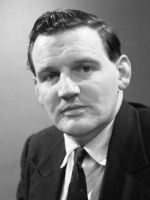
After five days of rehearsing, the cast were ready to go before the electronic cameras for the recording of the first episode of Doctor Who, which took place on Friday 27th September 1963 - exactly 50 years ago today.

Later known as the pilot episode, this recording was intended to be shown as the first episode of the new series.


Doctor Who was to be recorded in Studio D at Lime Grove in west London. Opened in 1914 by the Gaumont Film Company, Lime Grove was a film studio converted for television. Bought by the BBC in 1950, it would be home to some of the nation's most-loved programmes for over 40 years.

Studio D was 5,300 sq ft, about 83ft x 64ft. Long-running series broadcast from here included What's My Line?, Sooty, Dixon of Dock Green, Blue Peter, Steptoe and Son, whose theme was composed by Ron Grainer, and Britain's first soap, The Grove Family, which took its title family from the studios, was created and written by Jon Pertwee's father and elder brother, Roland and Michael, and whose cast included Peter Bryant.

Television production in the 1960s followed a strict pattern. Overnight, the sets for Doctor Who were rigged following the plans drawn up by the designer, Peter Brachacki. Over half the studio was taken up with the interior of the Doctor's time and space ship, the TARDIS. Built by freelance contractors Shawcraft Models (Uxbridge) Ltd, the set featured a large hexagonal unit strung from the ceiling. The main console took up a large space, consisting of six instrument panels and a pulsating central column. Other sets included the school classroom and the junkyard, which featured the TARDIS prop.

Once the sets were rigged they needed to be lit. Television lighting is a skilled art which takes years of training and experience. Sam Barclay was assigned to light the episode, having just finished working on the drama Jane Eyre. As well as creating the atmosphere of the show, the lighting director also needs to make sure the characters are correctly lit by careful positioning of key lights and back lights.

Camera rehearsals took place in the afternoon. The show would be recorded as live, with just one camera break at the point the crew entered the TARDIS. This was the first time the studio crew would have a chance to run through the complete show. The senior representatives of the crew would have attended the final rehearsal the previous day and made notes to pass on to their teams. The director, Waris Hussein, supplied a camera script, with all the shots he would require listed by shot number. However, it was not until the crews started rehearsing with the cast that the pieces started to come together. In a small studio such as Lime Grove, everyone needed to be totally aware of what they should be doing, from camera operators and cable bashers, to sound boom operators, to floor managers and assistants who were responsible for making sure everyone on the studio floor was where they should be.

In the studio gallery the vision mixer, Clive Doig, would need to make sure he knew exactly which camera to cut to the recording line at each point, guided by the production assistant who would call out the camera shots. The sound supervisor, Jack Clayton, would make sure the right microphones were faded up and would mix in the special music and effects played in by the grams operator at the back of the sound booth. The technical manager would need to make sure all equipment was running correctly and in the lighting gallery all cameras were constantly adjusted to ensure they produced pictures of the same quality. Co-ordinating everything was the director. Because the show had to be recorded as live, it was essential that everything was rehearsed as much as possible to reduce the possibility of mistakes.

The cast were made up by the make-up department headed by Elizabeth Blattner, and William Hartnell was fitted with his wig. Costumes were supervised by Maureen Heneghan.

After a supper break the recording of that first episode began, with the first person to step in front of a camera being Fred Rawlings playing a policeman who, while on night beat amid mist and as a clock bell is heard to strike three times, shines his torch over the gates of a scrap merchant called I. M. Foreman, at 76 Totter's Lane . . .

It is difficult to imagine the pressures in the studio as the team brought that first episode to life. For such an innovative drama, though, problems were inevitable. The recording for that pilot episode is available to watch in full on The Beginning DVD box set. One of the biggest problems was with the doors on the interior of the TARDIS set. They refused to close and can be seen flapping open behind the main characters. Because of the problem, Hussein made the decision to retake the final half of the show. The section from the break where the crew entered the TARDIS to the end of the episode was performed again, this time to the satisfaction of the director and producer.
Verity Lambert
It was terribly ambitious, it was hard. It was our first day in the studio, we had these awful cameras, we had Sydney [Newman - Head of Drama] coming in saying he hated the titles and the title music. Everyone was under tremendous pressure.
Waris Hussein
All my wonderful visual shots that I'd designed on paper were now going to have to be manifested by these monstrous cameras that were so heavy that the cameraman couldn't move.
It had been a long process but, to the relief of Hussein and Lambert, the first episode was now in the can. It would be shown to the bosses the following week. The cost of the recording session was later estimated to have been £2,143, 3 shillings, and 4 pence (£2,143.17).

Next EpisodeTitle Deeds
SOURCES: Doctor Who: Origins, The Beginning, DVD Box Set, BBC Worldwide; An incomplete history of London's television studios; The Handbook: The First Doctor – The William Hartnell Years: 1963-1966, David J Howe, Mark Stammers, Stephen James Walker (Doctor Who Books, 1994)


FILTER: - The Story of Doctor Who

Big Finish: September releases

Friday, 27 September 2013 - Reported by Chuck Foster
This month's Doctor releases from Big Finish feature the start of the 1963 trilogy, an adventure for the First Doctor, Steven and Vicki, a further "lost" adventure for the First Doctor, and a new set of adventures for the Victorian investigators Jago and Litefoot.

Fanfare of the Common Men (Credit: Big Finish)Fanfare for the Common Men (available to order)
Starring Peter Davison as The Doctor, with Sarah Sutton as Nyssa

If you remember the Sixties, they say, then you can’t have been there.

The Doctor remembers the Sixties. That’s why he’s taking Nyssa on a trip back to November 1963. Back to where it all began. Back to the birth of the biggest band in the history of British music. Back to see those cheeky lads from Liverpool...

Mark, James and Korky. The Common Men. The boys who made the Sixties swing with songs like Oh, Won’t You Please Love Me?, Just Count To Three and Who Is That Man.

The Doctor remembers the Sixties. And there’s something very wrong with the Sixties, if the Beatles no longer exist...
The Companion Chronicles: Upstairs (Credit: Big Finish)Upstairs (available to order)
Starring Peter Purves as Steven and Maureen O'Brien as Vicki

When the TARDIS lands in a dilapidated attic, the Doctor, Vicki and Steven discover they are on Earth, in London… in Number 10 Downing Street.

However alien forces are at play here, affecting the very fabric of the building… and adjusting the very essence of history itself.
The Lost Stories: The Dark Planet (Credit: Big Finish)The Dark Planet (available to order)
Starring William Russell as Ian Chesterton and Maureen O'Brien as Vicki

Somewhere far back in the early days of the universe the TARDIS lands on a world lit by a dying sun. Missing from the Doctor's star maps and dotted with strange crystalline statues, it is a world ripe for exploration. But it is also a world of destruction.

Venturing out onto its surface, the time travellers find themselves drawn into an age-old conflict between the two species residing on the planet - people of Light and Shadow. Proving a catalyst for the escalation of the conflict, the Doctor and his friends need either to create a peace or to pick a side.

Because in times of war, nothing is ever black and white.
Jago and Litefoot - Series Six (Credit: Big Finish)Jago and Litefoot - Series Six (available to order)
Starring Trevor Baxter as Professor George Litefoot and Christopher Benjamin as Henry Gordon Jago

After returning to Victorian London, Jago and Litefoot are approached by the enigmatic Colonel and offered a role they cannot refuse – investigators by Royal Appointment to Queen Victoria!

Their missions include a mystery on the Suffolk coast where strange things lurk in the sea mist, an encounter with Freud and a threat to the realm itself… But who can save Professor Litefoot when he is accused of murder, and no one can be convinced of his innocence?

6.1 The Skeleton Quay by Jonathan Morris
6.2 Return of the Repressed by Matthew Sweet
6.3 Military Intelligence by George Mann
6.4 The Trial of George Litefoot by Justin Richards
PLUS! An extra bonus CD of behind-the-scenes material.

Win a copy of Upstairs

This month's competition thanks to Big Finish is to win one of five copies of Upstairs. To be in with a chance to win, please answer the following question:
The Doctor has encountered Prime Ministers past, present and future over the course of his adventures, but which one was forecast by him to be the architect of Britain's "Golden Age"?
Send your answer to comp-upstairs@doctorwhonews.net with the subject line "Yes, I know!", along with your name, address, and where you saw the competition (the news website, twitter, facebook, etc.). Only one entry per postal address will be accepted. The competition is open worldwide, and the closing date is 6th October 2013.


FILTER: - Audio - Competitions - First Doctor - Fifth Doctor - Big Finish

The Tenth Doctor on UKTV

Thursday, 26 September 2013 - Reported by Paul Scoones
UKTVOctober sees the broadcast of nine episodes featuring David Tennant’s Tenth Doctor on Australian and New Zealand television. These screenings are part of the 50th Anniversary season of Doctor Who on the UKTV Australia and UKTV New Zealand channels.

The selection includes four episodes each from the 2006 and 2008 series, with the 2007 series represented by just one episode. All four of Steven Moffat's Tenth Doctor episodes are included.

The schedule for the month in both countries is as follows:

6 October
School Reunion - AU: 4:35pm; NZ: 4:45pm (NZ repeat 7 Oct, 4:20am)
The Girl in the Fireplace - AU: 5:30pm; NZ: 5:35pm (NZ repeat 7 Oct, 5:05am)

13 October
The Impossible Planet - AU: 3:35pm; NZ: 3:50pm (NZ repeat 14 Oct, 3:25am)
The Satan Pit - 4:30pm; NZ 4:45pm (NZ repeat 14 Oct, 4:15am)
Blink - AU: 5:30pm: NZ: 5:35pm (NZ repeat 14 Oct, 5:05am)

20 October
Silence In The Library - AU: 2:25pm; NZ: 4:45pm (NZ repeat 21 Oct, 4:10am)
Forest Of The Dead - AU: 3:25pm; NZ: 5:40pm (NZ repeat 21 Oct, 4:55am)

27 October
The Stolen Earth - AU: 2:25pm; NZ: 4:30pm (NZ repeat 28 Oct, 3:50am)
Journey's End - AU: 3:25pm; NZ: 5:20pm (NZ repeat 28 Oct, 4:40am)

Episodes featuring other Doctors also scheduled to screen on UKTV during October include in Australia, a screening of Series One (2005), weekdays at 9:20am beginning Thursday 17 October, and Series Seven (2012-13) Sunday evenings at 5:30pm from 20 October. New Zealand has The Doctor, The Widow and the Wardrobe at 6:30pm on Sunday 6 October, followed by Series Seven, also on Sunday evenings at 6:30pm from 13 October.

Upcoming broadcasts can be found on UKTV's Doctor Who guide for Australia and New Zealand.


FILTER: - WHO50 - Tenth Doctor - New Zealand - Australia

An Unearthly Series - The Origins of a TV Legend

Thursday, 19 September 2013 - Reported by Marcus
Title Deeds
The twentieth in our series of features telling the story of the creation of Doctor Who, and the people who made it happen.

With the first scripts now complete and work well under way on the titles and music for the new series, the cast and crew began the start of the long process of turning the thoughts and ideas of the production team into a television play.

It was on Thursday 19th September, exactly 50 years ago today, that the first dramatic filming for an episode of Doctor Who took place.


In the days before video editing, complicated sequences, or items that required a lot of setting up, would always be recorded on to film. Film was a much more flexible medium than video tape, primarily because it could be easily edited.

Film was also used for sequences that needed a large set, one that would not be practical in the confines of a television studio. It was used for sequences that would not be allowed in an electronic studio, such as those involving fire or water.

The downside of film production was the cost. It was more expensive than video recording and took much longer to produce. Camera set-ups and lighting took time and sequences had to be repeated many times to get the required shots. Film then had to be developed and edited before it was transmittable.

Any film sequences needed to be complete before the studio session took place in the electronic studio, as film insets needed to be played through the studio, in real time, to become part of the complete recording. For the first episode of Doctor Who just one film sequence was needed: the shot at the very end of the episode when the TARDIS is seen having landed in prehistoric times, being overlooked by the shadow of a human.

One actor was required for this, and Leslie Bates provided the shadow of the caveman overlooking the TARDIS after it had landed, thus becoming the first actor to have his image recorded for Doctor Who, albeit only as a shadow and uncredited.

The following day, the four principal cast members met at BBC Television Centre at 3pm to take part in a photocall for Radio Times. A small mock-up of the junkyard set and the classroom had been rigged, and it was hoped by the production team that the series would be awarded the cover of the relevant Radio Times, but this was not confirmed.


It was the first time the four cast members had met, and Carole Ann Ford remembers her feelings on the day:
I was very much in awe of William Russell, having seen him in many productions, and he was so dishy.

I thought that Jackie seemed terrifying. I learnt later that she was very shy and whenever she was in a situation where she was uneasy she just went a bit rigid. It made her look a bit awesome.

Bill I liked immediately, and we got on terribly well.

The next day, on Saturday 21st September 1963, that first TARDIS team met in a West London hall, where they would begin the very first rehearsals for the very first episode of Doctor Who.

The location was the Drill Hall at 117 Walmer Road, London, W2. The part of Walmer Road where the local Territorial Army base once stood no longer exists. The street was split in half during the late-1960s to allow a new housing project to be built, and the location where those first tentative rehearsals took place - and where Doctor Who was first brought to life - now lies in Kingsdown Close, the site occupied by a block of flats sandwiched between the Hammersmith and City Underground Line and the Westway.

Recording Television

Television dramas in the 1960s were either transmitted live or recorded as live.

Video technology had developed to a point where shows could be recorded on two-inch-wide magnetic tape. However, editing ability was very limited and had to be done by physically cutting the unwanted material from the magnetic tape and splicing the two ends together.

A microscope was used to examine the tape to ensure the cut was done at the correct point of the electronic signal or else the picture would "roll". Because of the high cost of the raw materials there was a great reluctance to cut the tape, as it was intended that once the show had been broadcast the tape would be recycled and used again.
Any drama had to be recorded in as near to real time as possible. Although it was accepted that a drama as complex as Doctor Who would need some recording breaks, these were very limited and had to be agreed with the programme's producer. A thorough rehearsal of each episode was needed to ensure that each recording proceeded as seamlessly as possible.
Waris Hussein
This was a show that everybody didn't quite know where it was heading. They thought this was the beginning of something where we don't quite know where it's going to go, so we all sat down with a certain sense of occasion.
William Russell
You only had four days. We had to get on with it. It was moving fast all the time.
While the cast were establishing their characters, decisions were being taken on the running order of the series. By mutual consent, David Whitaker and Anthony Coburn agreed that Coburn's story The Robots should swap places in the series running order with the Terry Nation story, originally planned to be fifth in the series run. The main reason was that the scripts for The Robots were still not finished, while Nation's scripts were ready. Design work needed to be started on the story.

Looking much further forward, it was now decided to complete the first year's run with two seven-part stories and one four-part story. Nation was commissioned to write one of the seven-part stories, The Red Fort, which would be set during the Indian Mutiny.

Next EpisodeTitle Deeds
SOURCES: Doctor Who: Origins. Richard Molesworth. The Beginning. DVD Box Set. BBC Worldwide; The Handbook: The First Doctor – The William Hartnell Years: 1963-1966, David J Howe, Mark Stammers, Stephen James Walker (Doctor Who Books, 1994)


FILTER: - The Story of Doctor Who

Big Finish: The Light at the End cast update

Wednesday, 18 September 2013 - Reported by Chuck Foster
A pack shot has now been released for the forthcoming 50th Anniversary audio adventure The Light at the End from Big Finish. Tom Baker, Peter Davison, Colin Baker, Sylvester McCoy and Paul McGann unite as the Doctor(s), accompanied by Louise Jameson, Sarah Sutton, Nicola Bryant, Sophie Aldred and India Fisher as their companions. Geoffrey Beevers plays The Master, and there are also cameo appearances by Carole Ann Ford, William Russell, Maureen O’Brien, Peter Purves, Jean Marsh, Anneke Wills, Frazer Hines, Wendy Padbury, Katy Manning, Mark Strickson and Janet Fielding.

The Light at The End (pack shot) (Credit: Big Finish)

The five disc box set, which includes deluxe packaging and a lavish booklet, comprises:
  • Discs 1 and 2 – The Light at the End
  • Disc 3 – The Making of the Light at the End, featuring interviews with the actors and production crew
  • Disc 4 – This is Big Finish, a look at the current Doctor Who audio output of the company, with interviews with the actors and producers.
  • Disc 5 – The Companion Chronicles: The Revenants – William Russell performs as Ian Chesterton in a First Doctor story originally released as a download with Doctor Who Magazine.

Producer David Richardson said:
The edits are in, the designs are done and this story has now gone off to reproduction. We’re hugely proud of it – an epic story in which all our Doctors get to shine… and spend some very interesting times in each others’ company! Nick Briggs has done himself proud with the script, and Jamie Robertson’s sound design and music are phenomenal. Get ready for a very special audio celebration of 50 years of Doctor Who...

The Light at the End is available for pre-order.


FILTER: - Sixth Doctor - Audio - Eighth Doctor - Seventh Doctor - WHO50 - Fourth Doctor - Fifth Doctor